


 A board member asks how much grant funding your nonprofit has been awarded this year. Your program director wants to know when the next funder report is due. Meanwhile, someone is trying to find the approved budget before paying an expense.
Can your team answer those questions quickly?
At a small nonprofit, grant information has a way of spreading out. The application sits in one folder, the award letter is in an email, expenses are in a spreadsheet, and the reporting deadline is on someone’s calendar. Each piece is there, but finding the full answer takes longer than it should.
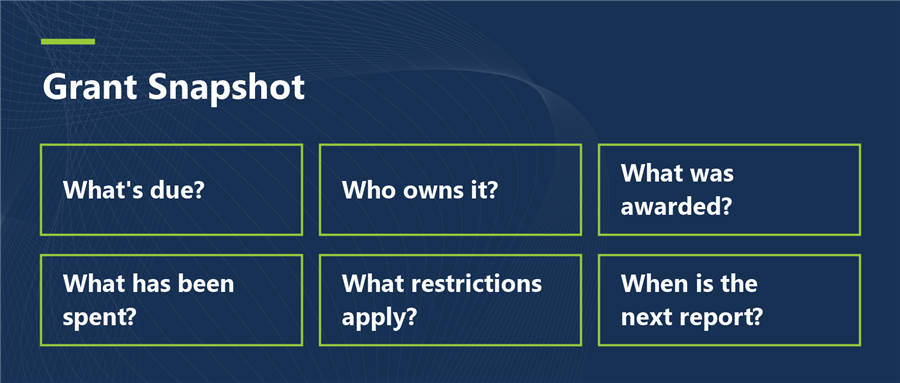
A useful grant database brings the details together. Here are six questions your team should be able to answer without starting a search party.
1. What Grant Deadlines Are Coming Up?
An application deadline is easy to notice when everyone is working toward it. The smaller deadlines leading up to submission can be easier to miss. So can a report due months after the award.
Your grant records should show application dates, internal milestones, and post-award reporting dates. That way, your team can see what needs attention this week as well as what is coming next month.
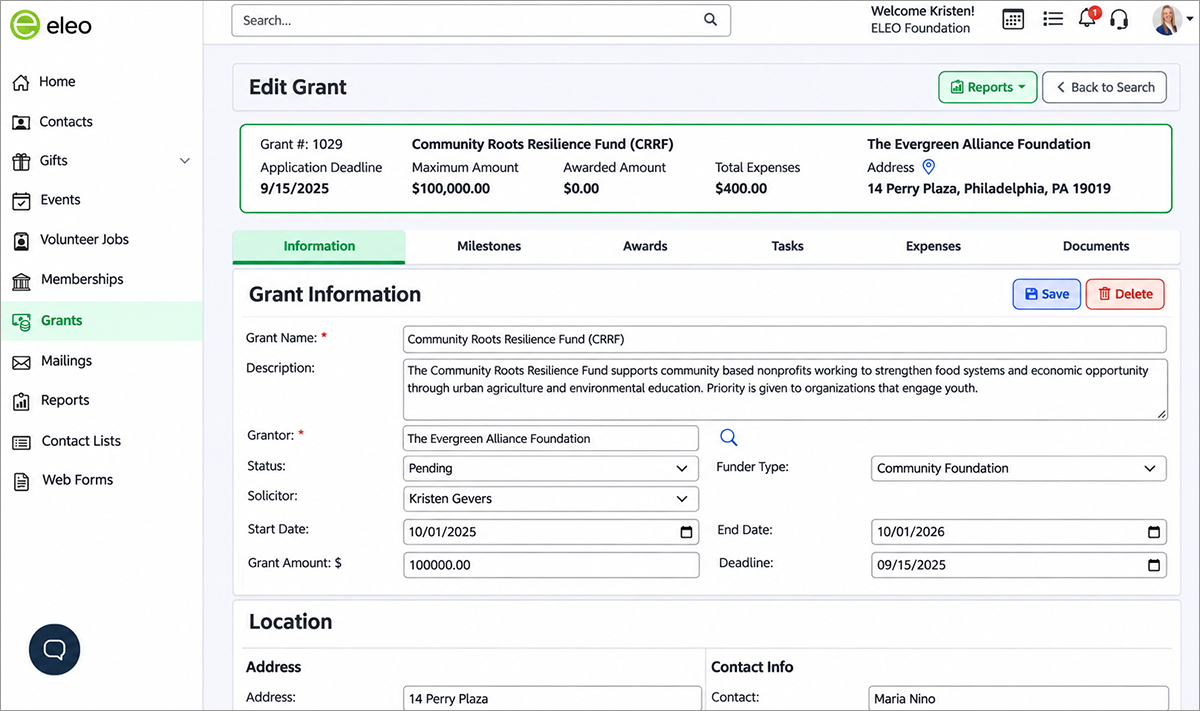
Eleo lets you track grant dates and milestones and filter your grants by upcoming deadlines. You can look across your grant activity instead of opening each record to find the next urgent task.
2. Who Is Responsible for Each Grant Task?
Knowing a deadline exists is only half the answer. Someone needs to be responsible for meeting it.
That may be the grant writer preparing an application, a program director collecting results, or a finance team member reviewing expenses. Sometimes several people need to contribute before one person can submit the final work.
Record those assignments with the grant. Eleo allows you to assign grant-related tasks to one or more team members, so the people involved can see what they are responsible for. If someone is out or leaves the organization, the work and its history aren’t trapped in that person’s inbox.
3. How Much Grant Funding Was Actually Awarded?
What you requested and what you received may be different numbers. That distinction matters when you’re planning programs and talking with leadership about expected revenue.
For each grant, keep the requested amount, outcome, actual award, and key award dates together. Eleo’s grant record provides a quick view of important amounts and dates, while reports can help you review activity across multiple grants.
Applications still under consideration belong in your pipeline. They shouldn’t be presented as funding already awarded.
4. How Much of Each Grant Award Remains?
An award amount on its own doesn’t tell you how the grant is progressing. Your team also needs to know what has been spent and how that spending compares with the approved plan.
Eleo lets you record grant-specific expenses alongside the award information. Reviewing the awarded amount and recorded expenses gives your team a starting point for understanding what may remain. Your finance records and the grant agreement still need to be checked for the authoritative balance and for any limits on when or how funds may be used.
Make that review a regular habit. A question about spending is much easier to address during the grant period than when the final report is nearly due.
5. What Spending Restrictions Apply to This Grant?
A grant may support a particular program, limit certain expenses, require approval for budget changes, or set dates when funds can be used. Those terms can vary from one award to the next.
Your database should make it easy to find the final agreement and approved budget. Keep notes that help staff identify important conditions, and store the award documents with the grant record so they can check the exact language before making a decision.
Eleo gives each grant a place for related documents and notes. Your team still needs to interpret the funder’s terms and follow its own approval and accounting procedures. The value of an organized record is that the right information is available when someone needs to check it.
6. When Is the Next Grant Report Due?
No one wants to discover a funder report is due while looking for a document that should have been collected months ago.
Record each reporting date as soon as the final award terms are known. Then set earlier milestones for gathering program results, reviewing expenses, drafting the report, and getting approval before submission. Assign the work to the people who will do it and keep a copy of the completed report with the grant.
If you start thinking about data and documentation while writing the application, the process gets easier still. You’ll know what the funder expects and can collect the right information as the work happens.
What Does Our Full Grant Pipeline Look Like?
These six questions matter for an individual grant. They also matter when a CEO or board member wants to understand the organization’s overall grant activity.
Which applications are in progress? What funding has actually been awarded? How many reports are coming due, and does the team have the capacity to complete them? When the information is organized, leadership can review the pipeline and workload without asking staff to build a new spreadsheet for every meeting.
Eleo’s grant management module brings grant records, funder contacts, deadlines, assignments, awards, expenses, documents, and reports into one place. It’s included with Eleo’s monthly subscription.
A grant database can’t do your team’s thinking for it. But it should give everyone the information they need to make decisions, follow through on commitments, and keep grant work moving.
How quickly can your nonprofit answer these questions today? See Eleo’s grant management tools and request a personalized demo.


